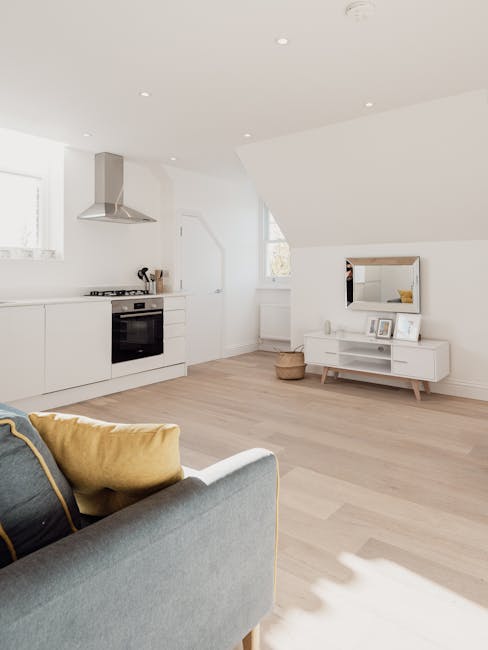
Clear pricing for studio and one-bed moves in Bounds Green

If you are moving out of a studio or one-bed flat in Bounds Green, the last thing you want is a vague estimate that changes the moment the van turns up. Clear pricing for studio and one-bed moves in Bounds Green gives you something far more useful: a realistic idea of what your move should cost, what is included, and what might add to the bill. That matters whether you are leaving a compact flat near Bounds Green tube, moving from a Victorian conversion, or simply trying to keep a tight grip on your budget while everything else feels a bit hectic.
Truth be told, small moves can still become surprisingly complicated. A single flight of narrow stairs, a parking issue, a last-minute sofa, or an awkward loading bay can change the shape of the day. This guide breaks down how transparent pricing usually works, what affects the quote, and how to compare options without feeling like you need a spreadsheet and a strong cup of tea just to book a van.
Why Clear pricing for studio and one-bed moves in Bounds Green Matters
For smaller home moves, the quote is not just a number. It is the difference between a calm moving day and a messy one. If pricing is clear, you can plan around it properly: decide whether you need packing help, whether a parking permit is likely to be needed, and whether you can manage the move in one trip or two. That kind of clarity is especially useful in Bounds Green, where local streets, shared entrances, and tight access can shape the logistics more than people expect.
Let's face it, moving a studio flat can look straightforward from the outside. A bed, a desk, a few boxes, maybe a bicycle, and off you go. Then you discover the lift is tiny, the mattress does not fit the landing, and the van can only stop a short walk away. A clear price helps you understand whether those realities are already built in or whether they will turn into extras later on. And that is the bit that frustrates people most.
Clarity also builds trust. When a removal company explains its pricing structure plainly, it is easier to compare providers on a fair basis. You are not just comparing a headline figure. You are comparing what is actually included: labour, mileage, loading time, vehicle size, waiting time, dismantling, and any special handling. That is much more useful than a vague "cheap move" claim that sounds good until you need the invoice explained.
Expert summary: For studio and one-bed moves, clear pricing should answer three basic questions up front: what the job costs, what that price includes, and what could change it on moving day.
How Clear pricing for studio and one-bed moves in Bounds Green Works
Clear pricing usually starts with a proper assessment of the move rather than a guess. For a small flat, that assessment might be done from photos, a short inventory, or a quick call. The point is to understand the shape of the job before the van is booked. A decent quote is usually based on a few core details, and if any of those are missing, the price can only be approximate.
Here is what most providers will want to know:
- The size of the property, such as a studio, one-bed flat, or small maisonette.
- How many items need moving, especially large pieces like beds, wardrobes, desks, and sofas.
- How easy it is to access the property, including stairs, lifts, narrow hallways, and distance from the van to the front door.
- Whether packing is required or whether everything will be ready to load.
- Whether disassembly or reassembly is needed.
- Where the move is going and whether parking, stairs, or tight access will be an issue at the destination too.
Some moving jobs are priced as fixed quotes, while others are hourly. In practice, both can work well, but they suit different situations. A fixed quote gives certainty, which many people prefer when they already have enough on their plate. An hourly price can work for flexible jobs or very light loads, though it is only really fair if the mover has enough information to estimate the work properly. Otherwise, you are gambling a bit, and nobody wants that on moving day.
A transparent quote should also make clear whether there are minimum charges. Many small moves have them, because even a short job still involves vehicle preparation, fuel, loading, unloading, and crew time. That is normal. What should not happen is a surprise jump in cost because the basics were never explained. If the provider says, "This price includes two movers, a van, and up to X hours," that is already much easier to work with.
For readers comparing moving help, it can also be useful to understand the wider service range. A provider offering man with a van support may suit a light studio move, while a fuller home moves service can be more suitable if your one-bed place has more furniture than it first appears. The service name matters less than the actual scope. That is the real point.
Key Benefits and Practical Advantages
Clear pricing is not just about money. It is about control, confidence, and fewer moving-day surprises. For small home moves, those things matter more than people admit at first. You may only be moving a few streets away, but once the boxes are packed and the clock starts ticking, even a small problem feels large.
The practical advantages are easy to see:
- You can budget properly. That means less stress in the week before the move.
- You can compare providers fairly. Apples with apples, not apples with a mystery crate attached.
- You can spot hidden extras earlier. Things like extra labour, long carries, or waiting time should be clear before booking.
- You can plan the day more efficiently. If you know how long loading should take, you can line up keys, parking, and handover times.
- You can choose the right level of help. Maybe you need full packing. Maybe you just need transport. Clear pricing helps you decide.
There is also a less obvious benefit: clearer communication. When a company prices a job properly, it usually asks better questions. That often means fewer misunderstandings later. You will notice the difference quickly. No guessing about whether the mattress is included. No awkward "oh, that wasn't mentioned" moment when the movers arrive. Nice and boring, in the best way.
For many Bounds Green residents, the best move is not the cheapest one on paper. It is the one that costs what you expected and gets the job done without a drama. That is a very different thing.
Who This Is For and When It Makes Sense
Clear pricing is especially useful if you live in a studio or one-bed flat and want to avoid open-ended charges. It is a good fit for renters, first-time movers, professionals relocating for work, and anyone leaving a compact property with limited furniture. It also helps if you are moving in a hurry, because last-minute moves can go off the rails fast if the quote is not specific enough.
This approach makes sense in a few common situations:
- You have a fairly small inventory and want a straightforward quote.
- You need to coordinate with a landlord, letting agent, or building manager.
- You are moving from a flat with stair access or a tight entrance.
- You want help only with transport and loading, not a full packing service.
- You are comparing several providers and want to understand exactly what is included.
It also suits people who are trying to keep control of the moving budget without cutting corners. There is nothing wrong with being price-conscious. In fact, it is sensible. The trick is to be price-aware rather than price-blind. A low headline figure can look attractive, but if it excludes the things your move actually needs, it stops being a bargain pretty quickly.
If you are unsure what level of service you need, a specialist moving company can explain the options. Some people only need a vehicle and a pair of helping hands. Others are better off with a more complete removal services package, especially where access is awkward or the furniture is heavier than it first seems. And yes, the sofa always looks lighter in the flat than it does on the staircase.
Step-by-Step Guidance
Here is a practical way to approach a studio or one-bed move in Bounds Green without overcomplicating it.
- Make a proper room-by-room list. Include large furniture, boxes, appliances, and anything awkward such as mirrors, plants, bikes, or flat-pack furniture.
- Check access at both addresses. Think stairs, lifts, parking distance, entry codes, and whether the van can stop near the door.
- Decide what help you actually need. Do you need packing, loading, disassembly, or just transport?
- Ask for a written quote. It should state the service, time basis, included labour, and any likely extras.
- Confirm parking arrangements. In London, this can make a big difference to timing and cost, especially if loading space is limited.
- Prepare items before moving day. Boxes taped, drawers emptied where needed, and fragile items clearly marked.
- Keep the move-day plan simple. Keys, access instructions, contact numbers, and building rules should all be ready.
It helps to think of the move as a sequence rather than one huge task. First, gather the facts. Then price the facts. Then book the help that fits. That simple order saves a lot of annoyance later. You do not need perfection here. Just enough structure to avoid the usual chaos.
A useful habit is to ask how the company handles delays. What happens if parking is tight? What if the lift is out? What if one side of the move runs late? Clear pricing is not just about the starting figure. It is also about how the provider handles real-life friction. Because real life, as ever, gets involved.
Expert Tips for Better Results
Over the years, one thing becomes obvious: the smoothest small moves are usually the ones where the client shares the right information early. Not every detail, just the right detail. That means describing the move as it really is, not as you hope it will be after you have done some heroic decluttering the night before.
Some expert tips that genuinely help:
- Send photos of the biggest items. A picture tells a mover more than a vague list ever will.
- Mention awkward access early. Narrow stairs, basement flats, and shared entrances can all affect time and labour.
- Separate essentials from non-essentials. If you can live without something for a day, it may not need to travel with the main load.
- Keep fragile items packed together. That makes loading easier and reduces handling mistakes.
- Ask what counts as a standard move. Every company defines "small move" a little differently.
If you are comparing quotes, look beyond the number. Ask whether the quote includes waiting time, fuel, mileage, and the number of movers. Ask whether the crew will carry items from the door only or from inside the property. Ask whether there is a charge for dismantling furniture. These are ordinary questions, not awkward ones. Honest providers expect them.
A small but important point: if your move involves anything bulky or delicate, mention it sooner rather than later. Mattresses, wardrobes, large mirrors, and awkward corner sofas can all change the job shape. A company that knows this in advance can price more accurately and bring the right van size. That alone can save a lot of faffing about on the day.
For additional planning, the company's own moving guidance can be useful too. Many customers find it helpful to browse practical pages such as packing and unpacking services or removals near me when deciding how much support they really need. Not glamorous reading, perhaps, but surprisingly useful on a Tuesday evening when boxes are everywhere.
Common Mistakes to Avoid
The biggest mistake is assuming all small moves are roughly the same. They are not. Two one-bed moves can look similar on paper and still require very different vehicles, labour, and timing. A flat on the ground floor with roadside access is a different job from a top-floor conversion with no lift and a restricted loading space outside.
Here are the usual traps:
- Not giving a full inventory. Missing items can lead to a price change later.
- Ignoring access issues. A short walk from the van might not sound like much, but it adds time and effort.
- Choosing only on headline price. The cheapest quote may leave out the things you need most.
- Forgetting parking restrictions. In London, this can quickly turn into a delay.
- Assuming packing is included. Sometimes it is not, and that is fair enough as long as it is clear.
- Leaving dismantling until the morning of the move. That is where people suddenly start inventing new language, usually under pressure.
Another common issue is underestimating how long small items take to move. People think, "It's only a studio, how long can it take?" Then there are eight suitcases, three under-bed boxes, a monitor, a bike, kitchen bits, and the odd drawer full of cables nobody remembers packing. It all adds up. Quickly.
Best to be honest with yourself at the start. If you do not want to pack, say so. If you have extra items, say so. If access is awkward, say so. A clear quote depends on clear information. That is not a sales line; it is just how decent pricing works.
Tools, Resources and Recommendations
You do not need specialist software to organise a studio or one-bed move, but a few simple tools make the process easier. A notes app, a basic spreadsheet, or even a paper checklist can keep everything visible. Visibility matters more than sophistication here.
Useful practical tools and resources include:
- A room-by-room inventory list. Keep it simple and update it as you pack.
- Photo folders on your phone. Images of furniture, access points, and awkward items help with quoting.
- Labelled boxes. A small label system can save a surprising amount of time during unloading.
- Measurement notes. Measure bulky items if you are not sure they will fit through doors or stair turns.
- A moving-day contact sheet. One place for keys, numbers, and arrival instructions.
For related planning and service choices, it can also help to look at the company's wider removal pages. For example, if your move is very light and straightforward, a man and van arrangement may be enough. If you need a larger vehicle or more handling support, a removal van or a fuller team might suit the job better. The best choice is the one that fits the move, not the one that sounds the flashiest.
One more recommendation: keep your essentials separate. Kettle, charger, documents, toiletries, a clean change of clothes. It sounds obvious, but on moving day obvious things have a habit of vanishing into the one box you can't find. Funny, that.
Law, Compliance, Standards, or Best Practice
For a home move, the main compliance concerns are usually practical rather than dramatic. You want a provider that works safely, handles goods responsibly, and gives pricing information honestly. In the UK, moving companies should have clear terms, sensible insurance arrangements, and reasonable care procedures for customer property. If anything is unclear, ask. A trustworthy provider should be able to explain how it handles damage, delays, complaints, and payment.
It is also sensible to check how a company manages health and safety. Moving heavy items in tight stairwells or through shared spaces is not something to improvise. Good practice includes using suitable equipment, checking load security, and using enough labour for the job. If a move is being done cheaply by cutting corners on safety, that is not a saving. It is a risk.
Parking and access are another area where local rules can matter. In Bounds Green, as in much of London, road space can be limited and loading arrangements can affect the move quite a lot. It is wise to clarify in advance who is responsible for permits or parking suspensions, and whether they are already included in the service price or not. The answer should be straightforward, not vague.
From a customer-protection point of view, a transparent service should also provide accessible information about its terms, payment process, insurance, and complaints route. Those details are not exciting, no, but they matter. You are trusting someone with your belongings. A proper company understands that and explains the process in plain English.
Useful policy pages can help set expectations before booking. If you want to understand how a company approaches safety and customer handling, pages such as insurance and safety, health and safety policy, and terms and conditions are worth reviewing. That is the kind of reading that saves headaches later, even if it does not exactly thrill the soul.
Options, Methods, or Comparison Table
Different pricing methods suit different kinds of small moves. The right one depends on how predictable the job is, how much furniture you have, and how much certainty you want. Here is a simple comparison.
| Pricing approach | Best for | Pros | Watch-outs |
|---|---|---|---|
| Fixed quote | Clear studio or one-bed moves with a known inventory | Easy budgeting, fewer surprises, clear expectations | Needs accurate information upfront |
| Hourly rate | Flexible jobs or moves where timing is uncertain | Can suit very small or simple jobs | Total cost can rise if access is slow or packing is not ready |
| Part-load style pricing | Small moves with limited items | Can be efficient if the load is compact | Timing may be less flexible |
| Full removal service | One-bed moves with extra furniture or more handling needs | More support, usually less stress | Costs more than a basic transport-only option |
If you are deciding between these, ask yourself a simple question: how predictable is the move really? If the answer is "pretty predictable," a fixed quote often makes life easier. If the answer is "well, it depends on how much I get packed this weekend," then a slightly more flexible model may suit you better. No need to overthink it beyond that.
Case Study or Real-World Example
Imagine a one-bed flat in Bounds Green with a standard bed, a small sofa, a desk, a dining chair, a TV, and around a dozen boxes. The property is on the second floor, there is no lift, and street parking is limited close to the entrance. Nothing extreme. Nothing unusual either. But it is enough to change the price structure compared with a ground-floor move with direct parking outside.
In that situation, a clear quote would usually factor in the number of movers, estimated loading time, the access difficulty, and whether the furniture needs dismantling. If the customer has already packed, that helps a lot. If the bed frame needs taking apart and there is a long carry from the van to the door, the job becomes more involved. Not impossible, just more involved. And that is precisely why transparent pricing matters.
Now compare that with a studio move containing a bed, a wardrobe, a few boxes, and very little else. On paper it sounds smaller. In practice, if the wardrobe is awkward and the building staircase is narrow, the time and labour can still be more than expected. That is the reality many people miss. Small property does not always mean small effort.
The best moves are usually the ones where the quote reflects the actual shape of the work. You get the service you expected, the team turns up prepared, and the day stays pleasantly ordinary. Which, on a moving day, is honestly a win.
Practical Checklist
Use this checklist before you confirm a studio or one-bed move in Bounds Green.
- Inventory completed: all main furniture and boxes listed.
- Access checked: stairs, lift, entry codes, and carrying distance noted.
- Parking understood: loading space or permit needs confirmed.
- Quote reviewed: labour, mileage, and time basis clearly stated.
- Extras clarified: packing, dismantling, and waiting time discussed in advance.
- Insurance checked: understand what is covered and how claims are handled.
- Building rules checked: any move-in or move-out restrictions noted.
- Fragile items protected: mirrors, screens, and glass packed safely.
- Essentials kept aside: documents, chargers, and day-one items separated.
- Contact details ready: mover, landlord, and building contact numbers at hand.
Ticking these off usually takes less time than fixing the problems later. Not a thrilling task, granted, but a very worthwhile one.
Get a free quote today and see how much you can save.
Conclusion
Clear pricing for studio and one-bed moves in Bounds Green is really about making the whole process easier to understand and easier to manage. Once you know what is included, what might cost extra, and how access affects the job, the move stops feeling like a gamble. You can compare providers properly, budget with confidence, and choose the level of help that fits your flat and your schedule.
If there is one practical takeaway, it is this: good pricing starts with good information. The more accurate the move details are, the more useful the quote will be. And the more useful the quote, the less likely you are to end up with surprises on the day. Simple enough, really. Well, simple in principle.
For a move that feels organised rather than rushed, take your time with the quote, ask the plain questions, and make sure the service matches the reality of your home. That small bit of care can make a big difference, and it often does. A calm move is possible, even in London.
Frequently Asked Questions
What does clear pricing mean for a studio or one-bed move?
It means the quote explains what is included, how it is calculated, and what could increase the cost. You should be able to see the basics without needing to decode vague wording.
Why do small flat moves still cost more than expected sometimes?
Because access, parking, stairs, and furniture size can make a small move more labour-intensive than it first appears. A compact flat can still involve a fair bit of work.
Is a fixed quote better than an hourly rate?
Not always, but a fixed quote is often easier for predictable studio and one-bed moves. Hourly pricing can work too if the job is genuinely simple and the estimate is realistic.
What details should I give when asking for a removal quote?
Share the property size, inventory, access details, parking situation, and whether you need packing or dismantling. Photos help as well. A lot, actually.
Do removal companies in Bounds Green usually charge extra for stairs?
Some do if the access changes the work significantly, while others build it into the quote after asking the right questions. The important bit is that you know before booking.
How can I tell if a quote is genuinely transparent?
It should clearly state what is included, how long the service covers, and whether extras such as waiting time or dismantling are charged separately. If it feels fuzzy, ask for clarification.
Should I choose the cheapest move for a studio flat?
Only if the service still covers what you need. The lowest price is not always the best value if it leaves out labour, access handling, or essential moving time.
Do I need to prepare my items before the movers arrive?
Yes, whenever possible. Packed boxes, disassembled furniture where needed, and clear access make the move faster and usually keep the cost more predictable.
What if parking is difficult near my flat?
Tell the mover early. Parking issues can affect timing, labour, and sometimes the overall price. It is far better to flag this in advance than to guess.
Can I get a quote if I am not fully packed yet?
Yes, but give a realistic estimate of what will be moving and mention anything bulky or uncertain. If you are still decluttering, say so. That honesty helps.
Is insurance included in the price?
It should be made clear in the quote or the company's terms. Always check what level of cover applies and how claims are handled before the move.
What is the best way to avoid hidden charges?
Ask direct questions about labour, mileage, waiting time, packing, dismantling, and access. A good provider will answer plainly and without fuss.
At the end of the day, moving out of a studio or one-bed flat should feel manageable, not mysterious. Get the details clear early, and the whole process tends to calm down a bit. That, more than anything, is worth holding onto.